

Dentures—Hampton, NH
Improve Your Quality of Life with Reliable, Customized Dentures
An estimated 15 percent of people with missing teeth have dentures crafted every year, according to the American College of Prosthodontists. Tooth loss can happen for a variety of reasons, from oral health problems like gum disease to accidents and aging. In any of these cases, having your missing teeth in Hampton replaced is an important part of maintaining a healthy lifestyle and smile. Our team at Oceanside Family Dental crafts customized dentures that can improve your day-to-day life—just give us a call to schedule a consultation!
Why Choose Oceanside Family Dental for Dentures?
- Comfortable, Precise Digital Impressions
- Customized Dentures That Look Natural
- Start-to-Finish Implant Denture Treatment
Who’s a Good Candidate for Dentures?
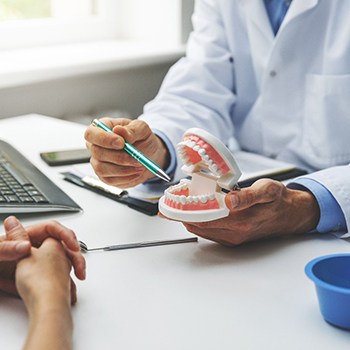
Dentures can benefit patients experiencing a variety of types of tooth loss. During your initial consultation, our team will examine your mouth and provide you with your options to rebuild your smile. Until your appointment with us, here are some things for you to take into consideration about candidacy for dentures.
Effects of Missing Teeth
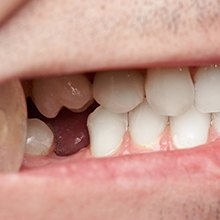
Tooth enamel is the strongest substance in the entire body. While they are incredibly durable, teeth aren’t completely indestructible. They can still become damaged in a variety of different ways – like due to tooth decay, gum disease, or trauma to the mouth. According to the American Academy of Periodontology, there are numerous negative effects of tooth loss, including facial sagging, difficulty speaking, trouble eating, and low self-esteem. By replacing your missing teeth with dentures, you can improve all of these areas, resulting in a better quality of life.
What Qualifies You for Dentures?
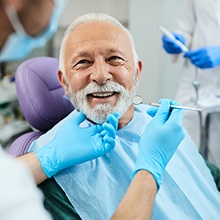
Dentures are an ideal solution for people who are missing multiple, most of, or all of their teeth. Depending on the number of teeth you are missing and where they are located in the mouth, we can put together a custom plan just for you. It’s important to have excellent oral health before getting dentures, so any tooth decay or gum disease needs to be addressed beforehand. Once your existing teeth and gums are in good health, we can plan the rest of the denture process.
Alternative Tooth-Replacement Options
If dentures don’t sound like your cup of tea, there are some other tooth replacement options you may like to consider:
- Dental Bridge: A dental bridge “bridges” the empty space with a replacement tooth. The replacement tooth, also called a “pontic,” is supported by two dental crowns that are placed on the adjacent teeth. This is ideal for those who are only missing one or a couple of consecutive teeth.
- Dental Implants: A dental implant is a screw-like post that is surgically inserted into the jawbone to support a replacement tooth. This requires that the patient has a healthy jawbone. Dental implants have a higher upfront cost than dentures, but they are made to last for multiple decades.
Types of Dentures

There are multiple types of dentures for patients facing different tooth loss scenarios. Based on our findings during your consultation, we may recommend one of these three types of dentures that we offer.
Partial Dentures
Partials are able to replace several missing teeth across an arch. They utilize a metal or acrylic base designed to fit like a puzzle piece between your existing teeth. Attached to the base are natural-looking replacement teeth crafted from porcelain or ceramic.
Full Dentures
Full dentures are able to restore an entire arch of missing teeth. The base is crafted from a gum-colored acrylic and designed to sit atop the gums and utilize natural suction to remain in place. It supports lifelike ceramic or porcelain replacement teeth, making basic tasks like eating and speaking much easier.
Implant Dentures
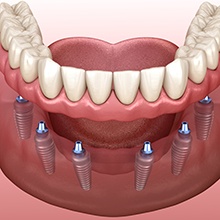
We also offer implant dentures, which allow you to reap all of the benefits of traditional dentures as well as implant technology. Instead of your prosthetic being supported by suction, small titanium implant posts will be inserted below the gumline to replace your missing tooth roots. These will hold your dentures in place, eliminating any shifting and restoring your bite power by up to 80%.
The Benefits of Dentures

Dentures in Hampton offer several life-altering benefits and have been a trusted tooth-loss solution for countless decades. Some of the advantages that you’ll be able to enjoy with your new prosthetic include:
- Natural-looking replacement teeth
- Effectively restores bite, making eating and speaking easier
- Cost-effective tooth-loss treatment
- Easy to clean and maintain
- Can preserve facial appearance
- Ability to last between seven and 10 years with the proper care
- Can be supported by dental implants for added strength, lifespan, and stability
If you would like to cash in on these wonderful benefits, don’t wait to give our team a call today to plan your consultation!
Denture FAQs
How Long Must I Wait After Extraction to Get Dentures?
Dentures are a tried-and-true solution for tooth loss, but some patients with a few remaining natural teeth may need additional extractions to make room for them. Removing any stragglers ensures your restoration fits and functions correctly, but it’s normal to wonder how long you should wait after your procedure before moving forward.
However, the exact duration can depend on your unique circumstances. For example, if you’re getting implant dentures, it’s sometimes possible to receive your restoration the same day as your extraction. But in most cases, you’ll need to wait about 3 to 6 months for your gums to recover sufficiently before proceeding with your chosen treatment.
What is the Average Age for Dentures?
Many people associate dentures with aging and feel embarrassed to need one of these lifelike restorations. This is likely partly due to the fact that tooth loss is more likely to affect older adults. For instance, sources estimate that approximately 33% of people aged 20 to 39 are missing at least one tooth, compared with nearly 66% of people aged 40 to 64.
But the leading cause of tooth loss is periodontitis, or advanced gum disease, closely followed by severe tooth decay and physical trauma. Any of these oral concerns can affect people at any stage of life, and there’s no age requirement or restriction on getting dentures to restore your smile’s appearance and functionality.
Am I A Good Candidate for Dentures?
There are several different types of dentures, and each has its own requirements for who might be considered a good candidate. Complete dentures rely on a firm suction against your gums to remain in place, so it’s often recommended for those who have suffered severe tooth loss, have sensitivity, and have sufficiently healthy connective tissues. Meanwhile, partials require that you have enough healthy teeth remaining to serve as an anchor for your prosthetic.
Implant dentures involve surgically replacing several support rods into your jaw to support your restoration, and therefore have different criteria. Before proceeding, Dr. Ravi will update your medical history to ensure you can safely undergo the procedure. She’ll also measure your jawbone density to verify whether it’s strong enough to maintain your new teeth.
What Should I Avoid Eating with Dentures?
Regardless of how many natural teeth remain, our team in Hampton can provide lifelike dentures to rebuild your arches and improve your bite force. However, certain foods can potentially harm your restoration and should be avoided.
Some common culprits include:
- Nuts, seeds, and other hard foods. Anything too hard could damage or dislodge your prosthetics.
- Sticky or hard candies. Lollipops, taffy, and other sugary sweets can yank or push your teeth out of place or injure their materials.
- Tough meats. Steaks and other cuts that require extensive biting and chewing can be challenging. You might have better luck cutting meat into smaller bites that are easier to grind.
- Raw fruits and veggies. Though nutritious, they are often problematic to bite into. Cooking, steaming, grilling, or blending them to soften them can help.
What Should I Do If My Dentures Break?
If your dentures in Hampton break, see your local dentist for repairs (or replacement) as soon as possible. Failing to do so will harm your smile in the long run.
Broken dentures are a major safety hazard, to the point that they count as a dental emergency. Continuing to use them could cause severe cuts to your gums and soft mouth tissues. Worse yet, they don’t work effectively; they can’t chew food well enough to ensure your nutritional health.
Given these facts, you should quickly have a dentist address your broken dentures. They may be able to repair it if the damage isn’t too severe. Alternatively, they can recommend a reline or even provide a replacement prosthetic.
Can I Reline Dentures Myself?
While DIY trends are exciting, you mustn’t extend them to your restorations. You can’t effectively reline your dentures yourself, as only a dentist has the knowledge and resources to do so.
Most patients lack expert knowledge of dentures, so DIY relining inevitably fails. Even those with “reliner kits” don’t usually know the proper way to fix their prosthetic teeth. Furthermore, a DIY approach can’t work because it lacks an outside perspective; you won’t see the areas that need (or don’t need) relining.
It’s best to avoid the issues above by having a dentist do the relining. Thanks to their training, skills, and equipment, they’ll do an amazing job of helping your dentures fit.
Can I Sleep with My Dentures?
You can’t actually sleep with your dentures, despite their lifelike and natural looks. You should remove the devices when you go to bed at night, preferably putting them in a nearby glass of cleansing solution.
Wearing dentures constantly is bad for your health, you see. Doing so restricts your gums’ circulation, resulting in soft tissue irritation and sped-up ridge resorption. It also lets bacteria thrive, as research shows that sleeping with dentures makes pneumonia more likely. Constant dentures is also associated with poor oral hygiene and higher levels of gum and tongue plaque.
Am I Too Young to Get Dentures?
The only ones “too young” to get dentures are kids and adolescents, despite the treatment’s association with the elderly. As such, whether you yourself are will depend on your age.
The fact remains that younger adults can suffer from tooth loss. Someone in their twenties or thirties might lose a tooth in an accident, whether it be a sports injury or a common fall. On the other hand, those in their thirties or forties might have teeth fall out from cavities, gum disease, or tooth infections. It’s safe to say that senior citizens don’t have the market cornered on empty smiles.